

Pre-Professional Pathways
Know What You Want to Become. We’ll Help You Find the Path.
Start With Where You Want to Go
You may already know what you want to become—a physician, pharmacist, dentist, veterinarian, physical therapist, attorney, athletic trainer, minister, or another professional. What you may not know, is which undergraduate major will get you there.
We hear it all the time:
“I know what I want to become, but I don’t know how to get there. How do I know which degree is right for me?”
You’re not alone, and you don’t have to figure it out on your own. Start with the career you want, and we’ll help you connect that goal to the undergraduate degree, coursework, and experiences that can prepare you for what comes next.
How Do I Choose the Right Undergraduate Major?
Start with the career you want to pursue, then work backwards.
Reverse engineering your journey is our speciality. Ask Yourself:
“What do I want to become?” → “What do I need to study?” → “How do I get there?”
At Manchester, your academic advisor and other pre-professional resources can help you connect these pieces. You do not have to figure out the entire path on your own.
What Is a Pre-Professional Pathway?
A pre-professional pathway is an undergraduate course of study designed to prepare you for admission to aprofessional or graduate program.
For some careers, that means completing specific science prerequisites before applying to medical, dental,pharmacy, veterinary, optometry, physician assistant, or physical therapy programs. For others, such as law,there may be greater flexibility in the undergraduate major you choose.
Your pathway may include:
- An undergraduate degree aligned with your interests and goals
- Required prerequisite courses
- Research, internships, clinical exposure, service, or other relevant experiences
- Academic and pre-professional advising
- Preparation for professional-school applications
- Opportunities to explore the profession before committing to your next degree
The right pathway depends on where you want to go, not simply on the name of your undergraduate major.
Do I Need a "Pre-Professional" Major?
Not necessarily. Many professional schools do not require a specific undergraduate major. Instead, they require applicants to complete particular prerequisite courses and demonstrate academic and professional preparation.
Translation: You get to choose an undergraduate major you’re interested in while still completing the courses that are required for your future.
For example, a student interested in law does not need to major in a program called “pre-law.” A student interested in medicine does not necessarily need a major called “pre-medicine.” Your major is your undergraduate degree. Your pre-professional pathway is the preparation that connects that degree to your professional goal.
The Right Question
The important question isn’t simply “What should I major in?” It’s “What do I need to accomplish during my undergraduate education to be ready for the next step?”
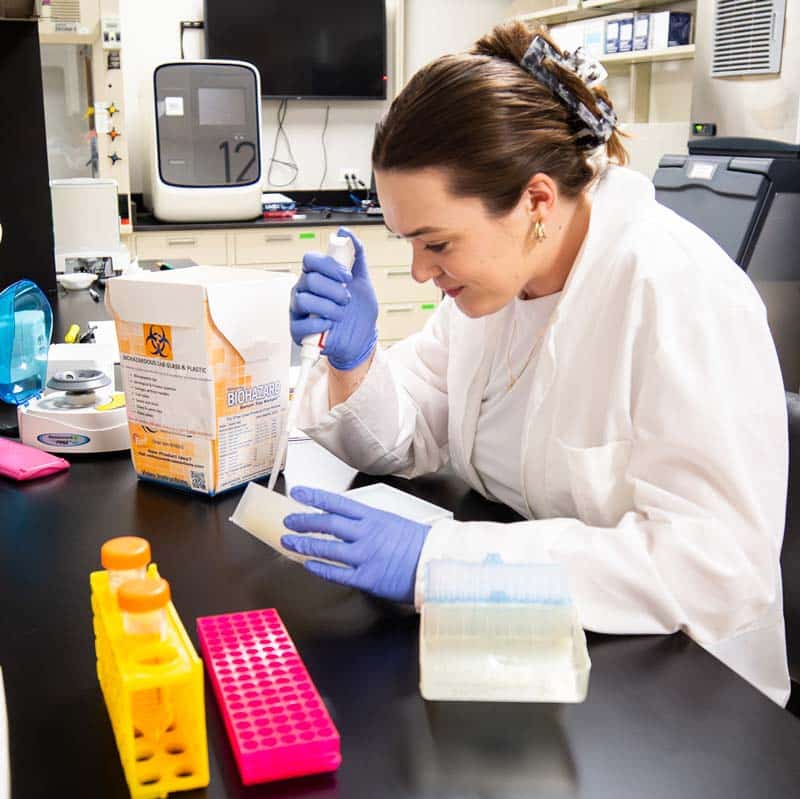
Discover Your Path by Knowing Your Career Goals
AVAILABLE PATHWAYS AT MANCHESTER UNIVERSITY
What Do You Want to Become?
Choose your career goal below. We’ll show you the path to get there.

Health Professions
Pre-Medicine
Want to become a physician? You can prepare for medical school through an undergraduate education that builds a strong foundation in the sciences and prepares you for the specific requirements of the medical schools you hope to attend.
Manchester’s pre-medicine pathway supports students pursuing both major types of medical education:
- Allopathic medicine (M.D.)
- Osteopathic medicine (D.O.)
Manchester’s Biology-Chemistry major is one undergraduate route for students interested in medical school.
- What major should I choose within health professions?
- What is the difference between an M.D. and D.O.?
Professional schools may accept students from a variety of undergraduate majors, provided they complete the required prerequisite courses. There is no single undergraduate major required for these fields of study. Students can come from a variety of academic backgrounds as long as they complete the prerequisite coursework required by the Professional schools to which they apply.
At Manchester, Biology-Chemistry provides a strong science-focused option for students preparing for medical school.
Both M.D. and D.O. physicians are fully licensed medical doctors. Students pursuing either path complete rigorous medical education and prepare to diagnose and treat patients. Manchester students interested in either allopathic or osteopathic medicine can use their undergraduate education to prepare for the admission requirements of the medical schools they plan to pursue.
Explore More within Health Care Professions
If your goal is a career in health care, Manchester’s Biology-Chemistry major provides a strong undergraduate foundation for a range of professional paths. Students interested in becoming physicians, dentists, optometrists, veterinarians, or physician assistants can build the science knowledge, prerequisite coursework, and relevant experiences needed to prepare for professional school. With a Biology-Chemistry degree and guidance from Manchester’s pre-professional advising, you can choose the path that aligns with your goals while building a strong foundation for the next step in your education.

Pre-Dentistry
Want to become a dentist? Your undergraduate education can prepare you for dental school by building a strong foundation in the sciences and helping you complete the prerequisites required by your intended programs.
We’ll help you map your undergraduate path to the coursework and prerequisites you’ll need for dental school.

Pre-Physicians Assistant
Want to become a physician assistant? Your undergraduate education is an important part of preparing for graduate-level physician assistant education.
A science-focused major can provide a strong foundation while leaving room to complete program-specific prerequisites and gain healthcare experience.

Pre-Optometry
Want to become an optometrist? Prepare for professional study in optometry through undergraduate coursework that builds your foundation in the biological and physical sciences and addresses the prerequisites for the programs you plan to pursue.
Manchester’s Biology-Chemistry major provides an undergraduate route for students interested in optometry.

Pre-Veterinary Medicine
Want to become a veterinarian? Students can pursuedifferent academic backgrounds while completing the prerequisite coursework required by the veterinary programs to which they apply.
Choose an undergraduate program that fits your interests and strengths, then work with an advisor to make sure your coursework keeps you on track for veterinary school.
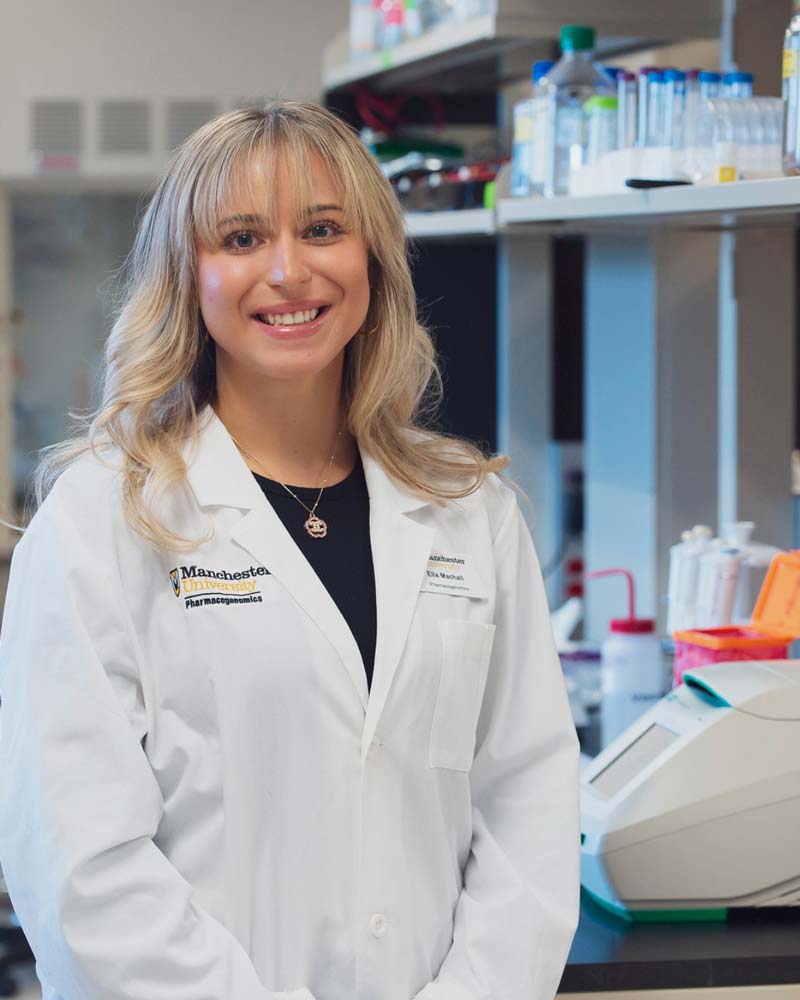
Pharmacogenomics & Precision Medicine
Pre-Pharmacy (PGx) and Pre-Pharmacogenomics (PGx)
Whether you’re drawn to patient care as a pharmacist or to the science of personalized medicine, Manchester offers a connected path from undergraduate study to advanced professional education. Start with Biology-Chemistry at our North Manchester Campus, then continue your education through Manchester’s PharmD, M.S. in Pharmacogenomics, or both through a dual-degree option. Both graduate programs (and the dual-degree pathway) can be completed 100% online, giving you the flexibility to advance your education while building toward your career goals. Manchester also pioneered the field with the nation’s first M.S. in Pharmacogenomics program. Among PGx graduates from the 2017–2021 classes, 89% were employed or enrolled in continuing education after graduation.
If you’re considering pharmacy or pharmacogenomics, Biology-Chemistry is a strong place to start. You’ll build a foundation in biology and chemistry while completing coursework that can prepare you for pharmacy school or advanced study in pharmacogenomics. Because requirements vary by program, our advisors can help you build an undergraduate plan that keeps you on track for the next step you want to take.
A Doctor of Pharmacy (PharmD) prepares you to become a licensed pharmacist, with education focused on medications, patient care, and the safe and effective use of drugs. A Master of Science in Pharmacogenomics (PGx) focuses on the relationship between genetics and how individuals respond to medications, preparing you for work in areas such as precision medicine, clinical research, drug development, and pharmacogenomics. In other words, a PharmD prepares you to practice pharmacy, while a master’s in pharmacogenomics prepares you to apply genetics and data to better understand and personalize medication therapy.
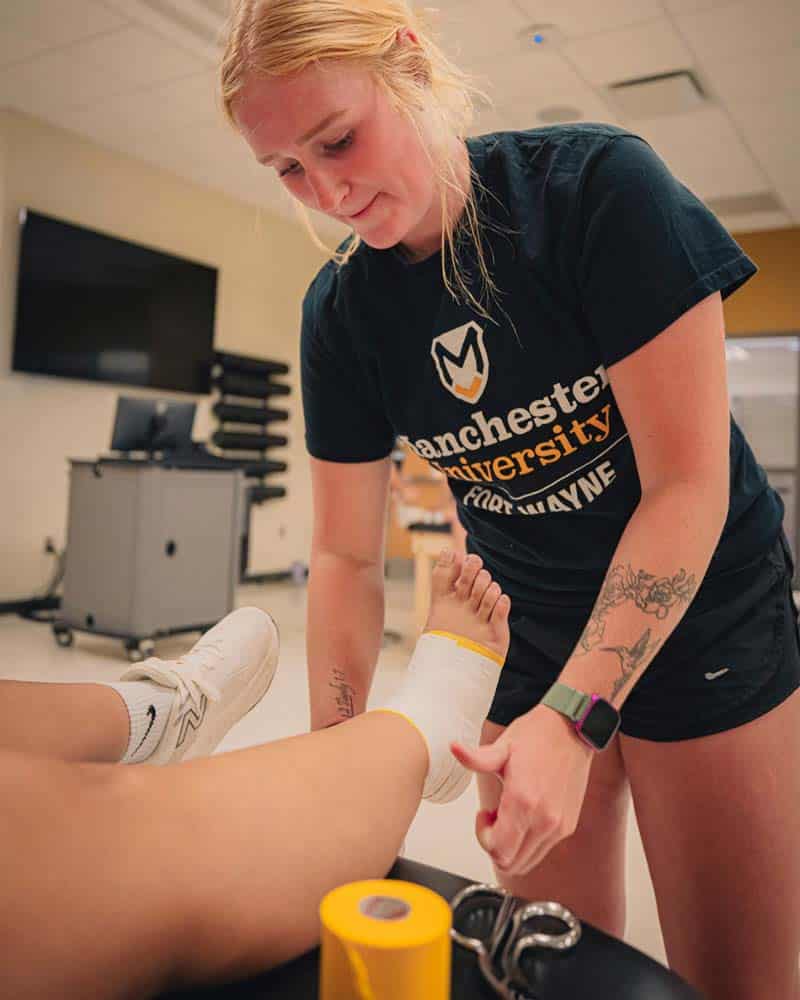
Exercise Sciences
Pre-Physical Therapy and Pre-Athletic Training
Want to become a physical therapist or athletic trainer? Manchester offers a streamlined path from undergraduate preparation to professional practice, all within the university. Students can begin with an Applied Pre-PT or Applied Pre-AT degree and complete their undergraduate education in as little as three years before continuing at Manchester University Fort Wayne for a Doctor of Physical Therapy (DPT) or Master of Athletic Training (MAT). When you complete the full pathway at Manchester, these professional programs offer an accelerated route designed to help you reach your career sooner while building on the foundation you’ve already established.
- What should I major in if I want to become a physical therapist?
- What should I major in if I want to become an athletic trainer?
If you know you want to become a physical therapist, you don’t have to piece together your undergraduate and professional education on your own. Manchester’s Applied Pre-PT degree provides a direct undergraduate starting point, with the opportunity to complete the degree in as little as three years before continuing to Manchester University Fort Wayne’s Doctor of Physical Therapy program.
Manchester offers a direct path from undergraduate preparation to professional athletic training education. Through the Applied Pre-AT degree, students can complete their undergraduate education in as little as three years before continuing to Manchester University Fort Wayne’s Master of Athletic Training program.

Law
Pre-Law
Want to become a lawyer?
Law schools welcome students from a wide range of undergraduate disciplines. At Manchester, your education can help you develop the reading, writing, research, analytical reasoning, communication, and critical-thinking skills that are essential to legal education and practice—while giving you the freedom to choose a field that matches your interests and strengths.
You’ll also find opportunities to put those skills into practice. Manchester’s Model United Nations program gives students hands-on experience researching complex issues, representing nations, negotiating with other delegates, advocating for positions, and communicating under pressure—all experiences that translate naturally to the skills used in law. In 2024, Manchester students earned five awards at the Indiana University Kokomo Model UN Conference, including Most Valuable Delegate, Top Negotiator, and multiple awards for advocacy. Manchester also holds permanent observer status with the United Nations as a non-governmental organization, a distinction rooted in the work of Manchester alumnus Andrew Cordier, who helped draft the United Nations Charter.
At Manchester, your path to law school starts with an undergraduate education designed to help you think critically, communicate clearly, and engage confidently with the complex issues that shape our world.
- What should I major in if I want to go to law school?
- How can I prepare for law school as an undergraduate?
There is no single required undergraduate major for law school.
The best major is one that interests you, challenges you academically, and allows you to develop strong writing, research, analytical, and communication skills while completing any other requirements needed for your goals.
You might study political science because you are interested in government and public policy. You might study psychology because you want to understand human behavior. You might study sociology, criminology, peace studies, or another discipline.
Your undergraduate major can be part of what makes your perspective distinctive in law school and in your future career.
Preparation for law school can extend well beyond the classroom.
At Manchester University, students can pursue experiences that allow them to explore the legal profession and develop practical skills, including opportunities such as Mock Trial, pre-law activities, internships, and engagement with legal professionals.
Your academic advisor can also help you understand the expectations of the law schools you are considering and plan your undergraduate experience accordingly.

Ministry and Faith Leadership
Pre-Ministry
Want to serve in ministry or pursue graduate theological education? Ministry can take many forms—and your path doesn’t have to begin or end with a pulpit. Manchester’s pre-ministry pathway helps you develop the knowledge, perspective, communication skills, and practical experience to serve others in the ways that fit your calling, whether that means pursuing ordained ministry, graduate theological education, or leadership as a lay person in a faith community.
Through Philosophy and Religious Studies, you’ll explore religious traditions, texts, beliefs, practices, ethics, philosophy, and the role of faith in individuals and communities. You’ll also build the perspective and skills to serve across many facets of ministry, including visitation, prayer, end-of-life care, worship leadership, children’s and adult ministries, missionary work, teaching, and faith-based community engagement. For students called to teaching and scholarship, the pathway can also provide a foundation for graduate study and future teaching in higher education.
Your vocation may lead you to a senior pastorship, a classroom, a mission field, a hospital room, a congregation, or simply alongside people who need someone to listen, pray, teach, and serve. Manchester can help you prepare for wherever that calling leads.
The best academic path depends on your vocation, faith tradition, denomination, graduate-school goals, and the type of service you hope to pursue. Manchester’s Philosophy and Religious Studies programs provide a broad foundation in religious traditions, theology, ethics, philosophy, and the ways faith shapes individuals and communities.
Manchester’s roots in the Church of the Brethren give students an especially meaningful context for exploring vocation and service. Manchester has a long tradition of connecting faith with learning, service, peace, social responsibility, and care for others. Students of any faith tradition (or those still exploring their beliefs) can engage with that heritage while developing their own understanding of vocation and preparing for graduate theological education, ministry, or service in their communities.
Ready to Get Started?
Take the next step toward your personal or professional goals with a certificate from Manchester University.